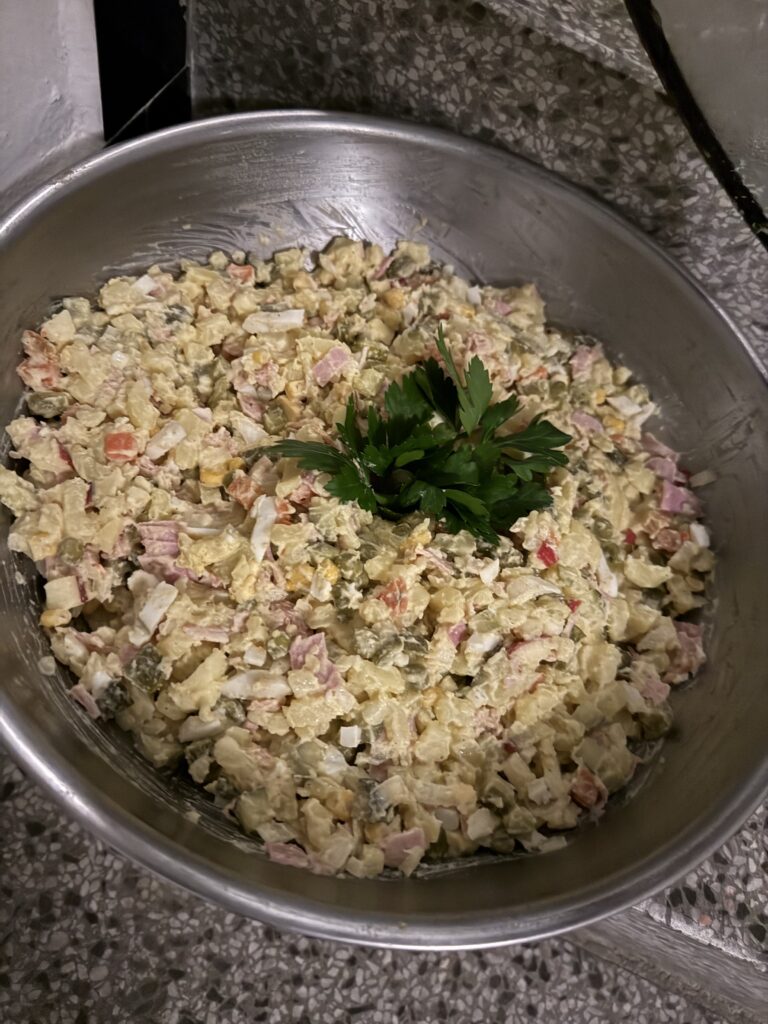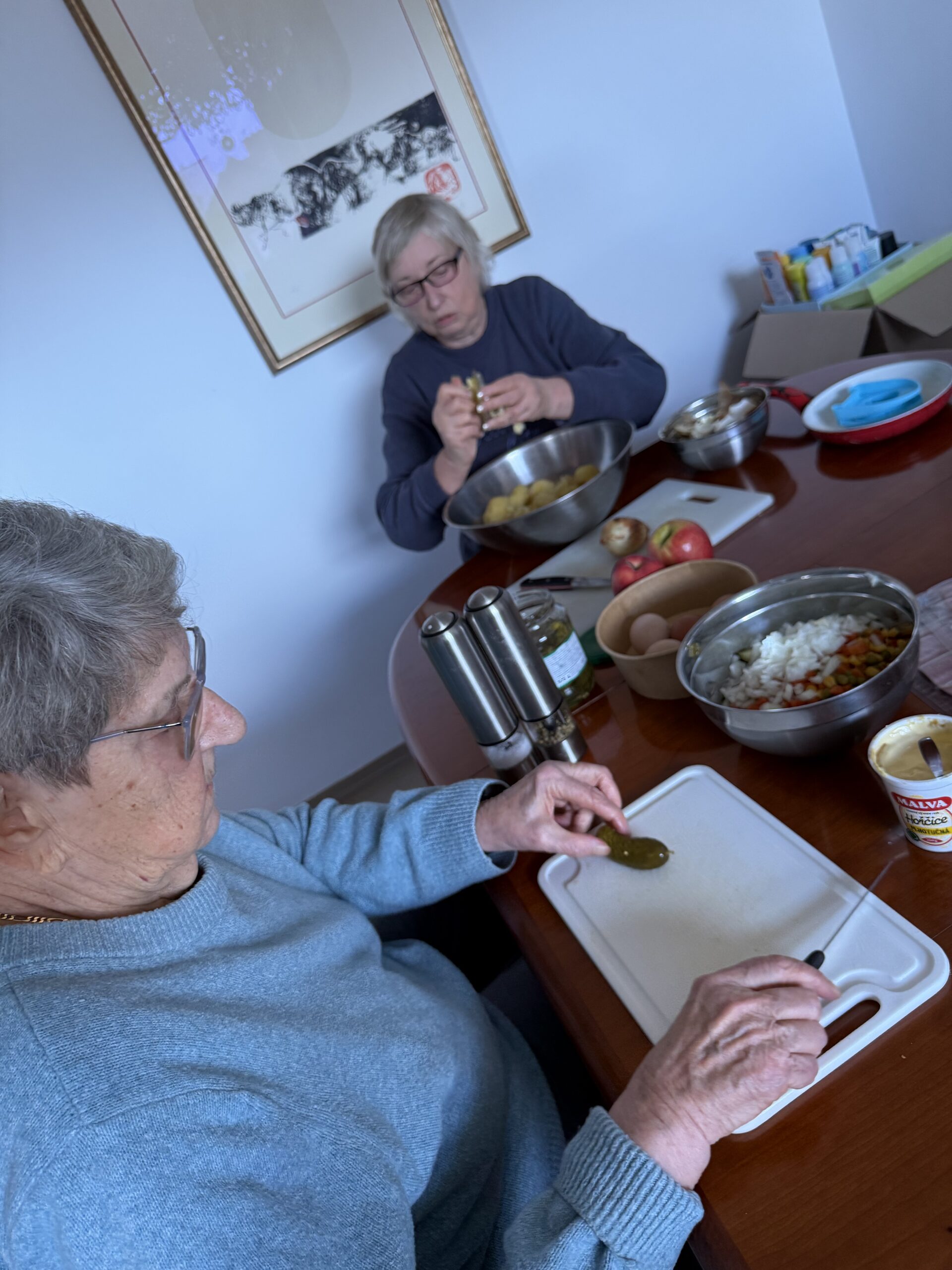
Making potato salad with two old Czech ladies at the dining room table is an experience that perfectly captures the charm and chaos of tradition. The table, once neatly set, transforms into a chaotic workspace, piled with jars, bowls, and ingredients scattered like a painter’s palette. Each movement, each argument, and each taste test is part of a ritual I’ve come to know but not love.
The two women, perched on dining chairs that creak under their determined movements, argue endlessly over what belongs in the salad, switching effortlessly between Czech and English. “To tam nepatří!” (“That doesn’t belong there!”) one exclaims, only to follow up in English with, “No more pickles, I said!” The salt grinder cracks and whirrs away, dispensing what seems to be an excessive amount of salt—but is probably just the right amount. After all, who am I to dispute over 160 years of combined experience?
They maneuver the wooden spoons with ease, dipping them in for a taste after every addition. Layers of sauce build up at the corners of their mouths in chronological order, each layer marking the sequence of ingredients tested and debated. Mayonnaise, mustard, and other condiments form a messy timeline, a testament to the evolving recipe. The spoons are neatly licked clean and briefly waved in the air before diving into the next jar to continue the ritual.
Bits of onion somehow find their way onto their faces. They wipe their foreheads with the backs of their hands, smearing bits of potatoes into their bangs as they focus intently on the task. Their sweater sleeves are speckled with mustard stains, smudged mayonnaise, and rogue flecks of boiled egg, bearing the evidence of their labor. The room smells of onions and other tangy ingredients, with an underlying sweetness of memories in the making.
They pass the bowl back and forth to add their contributions, picking up tangible items—bits of onion, stray pickles, or diced egg—from the table. Occasionally, they pop these stray bits into their mouths, nibbling as they work, ensuring nothing edible goes to waste. They carefully lick the utensils clean as the project comes to an end, savoring the final tastes of their creation.
Once the potato salad is declared complete, it is placed in the cold, unheated concrete and tile hallways of the 5th-floor apartment building, where every sound echoes endlessly. The chilly air and the stillness seem to work magic, allowing the flavors to marinate and meld overnight. Everyone knows it’s best the second day, when the salad reaches its peak perfection.

I used to work in a kitchen, where food safety was always a top priority. But in moments like these, I have to let go and understand that this is the old way—how things were done long before sterile kitchens and precise regulations. The dish will speak for itself, and what it says is undeniable: this is something that cannot be found in any restaurant, a taste born only of tradition and love.